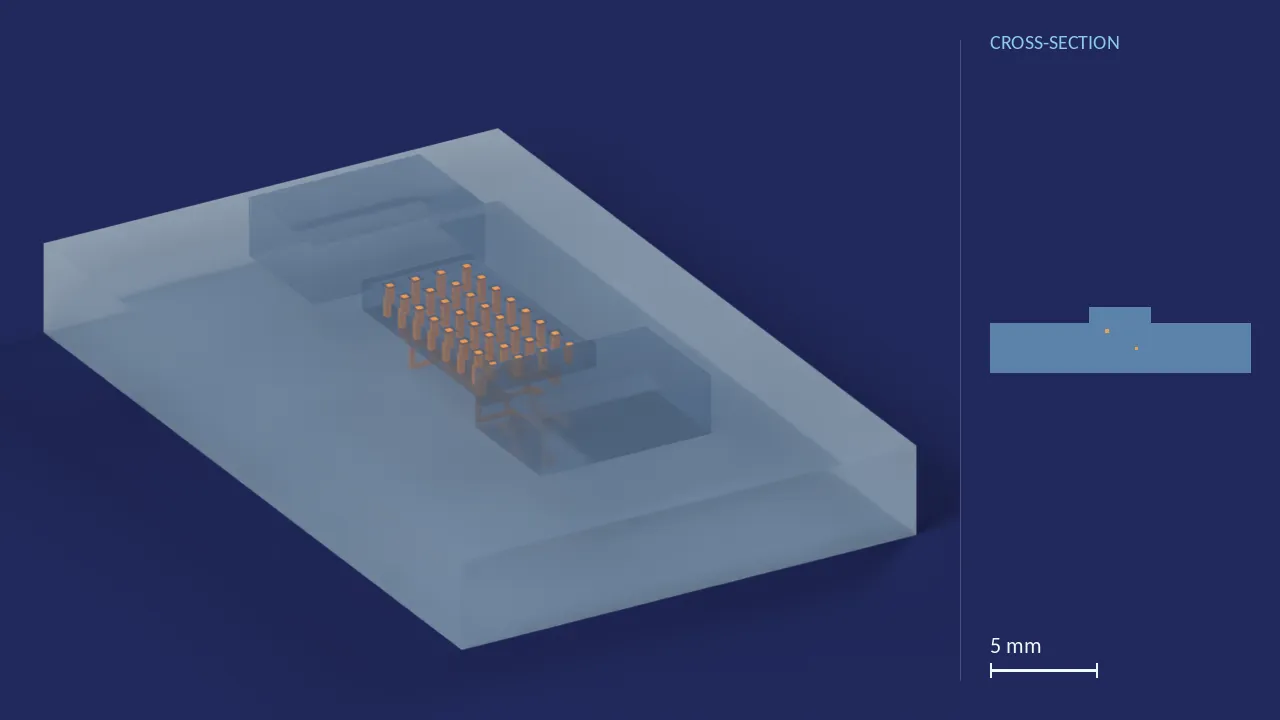
Geometry
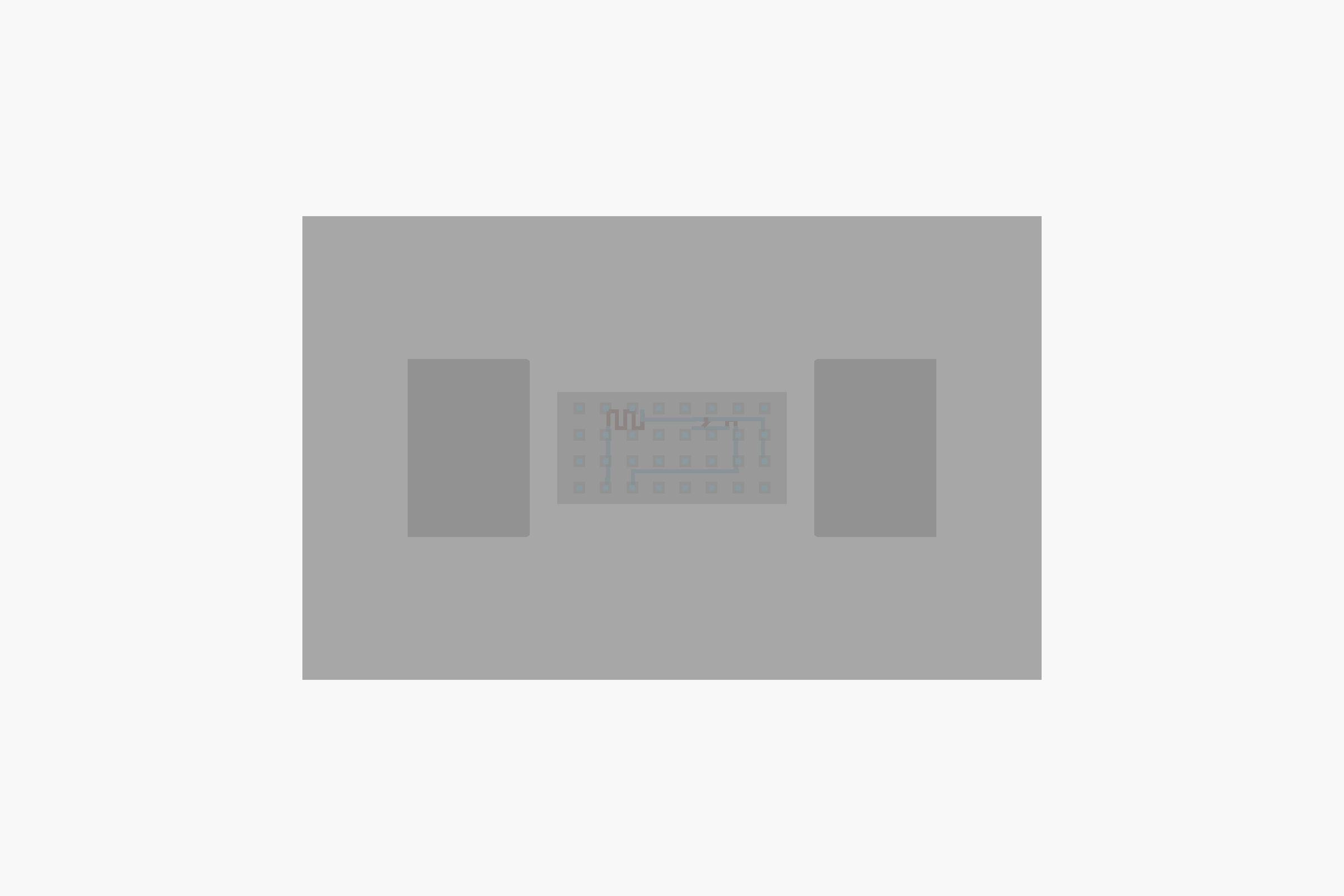
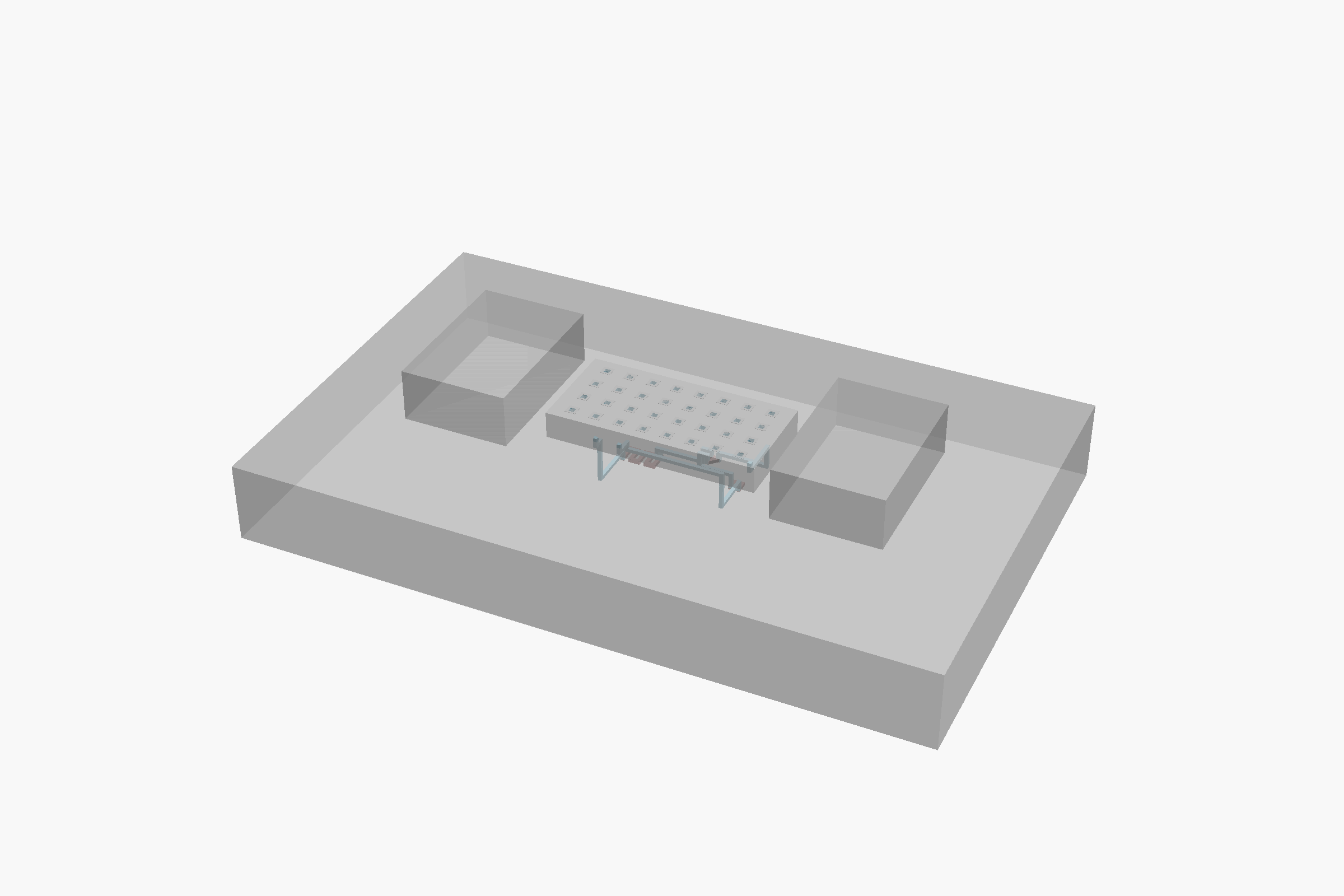
Top view (left) and isometric view (right) of the placed-and-routed chip. Rendered with OpenSCAD from the chip’s SCAD source, ketone_reroute.scad. Click for high-resolution.
Download: PNG (top) · PNG (iso) · SCAD source ↓
Specifications
Assay
This chip is designed to measure urinary β-hydroxybutyrate concentration — the dominant ketone body in serum and urine during ketosis — via a colorimetric enzymatic assay. β-hydroxybutyrate dehydrogenase catalyses β-OHB + NAD+ → acetoacetate + NADH, and the absorbance change at 340 nm is proportional to the β-OHB concentration in the sample.
Clinically, urinary ketone quantification supports diabetes monitoring (detection of diabetic ketoacidosis), metabolic state assessment, and ketogenic diet adherence tracking. Of the three ketone bodies, β-hydroxybutyrate is the most informative because it correlates better with overall ketosis than the urine-strip-dipstick standard acetoacetate.
The chemistry is adapted from the reagent kit ARG82173 (β-Hydroxybutyrate). The chip combines the urine sample with one reagent stream at the volumetric ratios required by the assay protocol; the output channel collects the mixed product for off-chip spectrophotometric readout.
Files
- SCAD
ketone_reroute.scad1.7 MBDownload - LEF
h.r.3.3_ketone_pcells.lef1.2 KBDownload - CSV
pcell_out_scad140 BDownload - PNG
ketone_iso_large.png60.7 KBDownload - PNG
ketone_top_large.png17.6 KBDownload
ketone_reroute.scad is the placed-and-routed 3D geometry — the main OpenSCAD source for this chip. h.r.3.3_ketone_pcells.lef contains chip-specific cell abstracts. pcell_out_scad lists the parametric serpentine-channel variants this chip required (with L1 / L2 / turn count). The PNG renders are high-resolution versions of the views shown in the Geometry section above.
Papers
-
Related methodology archetype
Goenner, B., Temple, S., Zapata, S., Wakeham, D., Snelgrove, A., Gaillardon, P.-E., Nordin, G. P., & Gale, B. K. (2025). An open source platform to automate the design, verification, and manufacture of 3D printed microfluidic devices. Scientific Reports, 15, 33077. DOI: 10.1038/s41598-025-15976-9
Applications
For research use only. Not for use in diagnostic procedures.
A design for urinary ketone body (β-hydroxybutyrate) quantification by a colorimetric assay, the kind used for diabetes monitoring, metabolic state assessment and tracking a ketogenic diet. One of the urinalysis chip designs in the Gale Lab urinalysis chip family (Erica Francis).